Inspiration
Eight tips for a luxury interior
You notice a luxury interior in the calm of a room: when you walk in, and still ten years later. That calm comes when material, light and proportion are right. We call it Soothing Luxury: luxury you feel rather than see. Below are eight choices that recur in our projects. Most of them are made long before anyone chooses a piece of furniture.

Inspiration
1. Start with daylight
More than anything else, daylight decides how an interior works. It changes through the day and with the seasons, and it falls differently in every room. A colour that looks warm in the morning can seem flat and cool that same afternoon. So every project starts with the light: where does the sun rise, where does it set and how does it move through the house? Only then do we choose the layout, the colours and the materials.
Judge a colour sample or a material on the spot where it will go, in the morning and again late in the afternoon. What looked right in the showroom can turn out quite differently on a north-facing wall at home.
Inspiration
2. Choose one calm base
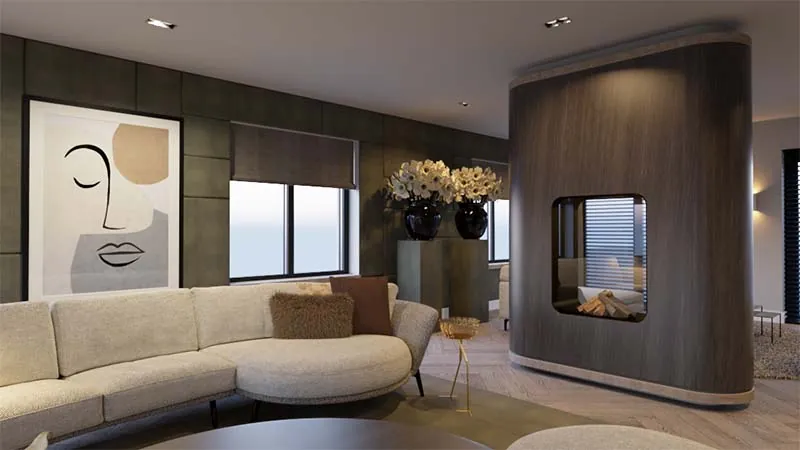
An interior built on one considered base colour looks richer and calmer than a room where many colours compete for attention. Unity brings calm, and calm is something you do not tire of. The interest lies in small differences within that one palette: a slightly warmer tint on the wall, a slightly cooler tone in the textiles.
Anchor that base in the things you will not replace soon, such as the floor and the bespoke joinery, and let the loose furniture follow. You can then change a piece later without the whole losing its balance. How colour and material work together is covered in our article on colours and materials for a high-end interior.
Inspiration
3. Invest in materials that improve with age
Put the budget into what you see and touch every day: the floor, the walls and the joinery. Choose materials there that grow more beautiful over the years, such as natural stone, solid oak and béton ciré. A solid wood floor can still be sanded after twenty years. A natural stone worktop builds up a patina and carries the marks of use in a way that becomes part of the house.
Quartzite is a natural stone we choose time and again. It began as sandstone and became much harder and denser under heat and pressure. No two slabs share the same veining. Materials like these cost more to buy, but you do not replace them. Here the rule is: less, but better.
Inspiration
4. Let bespoke joinery do the work
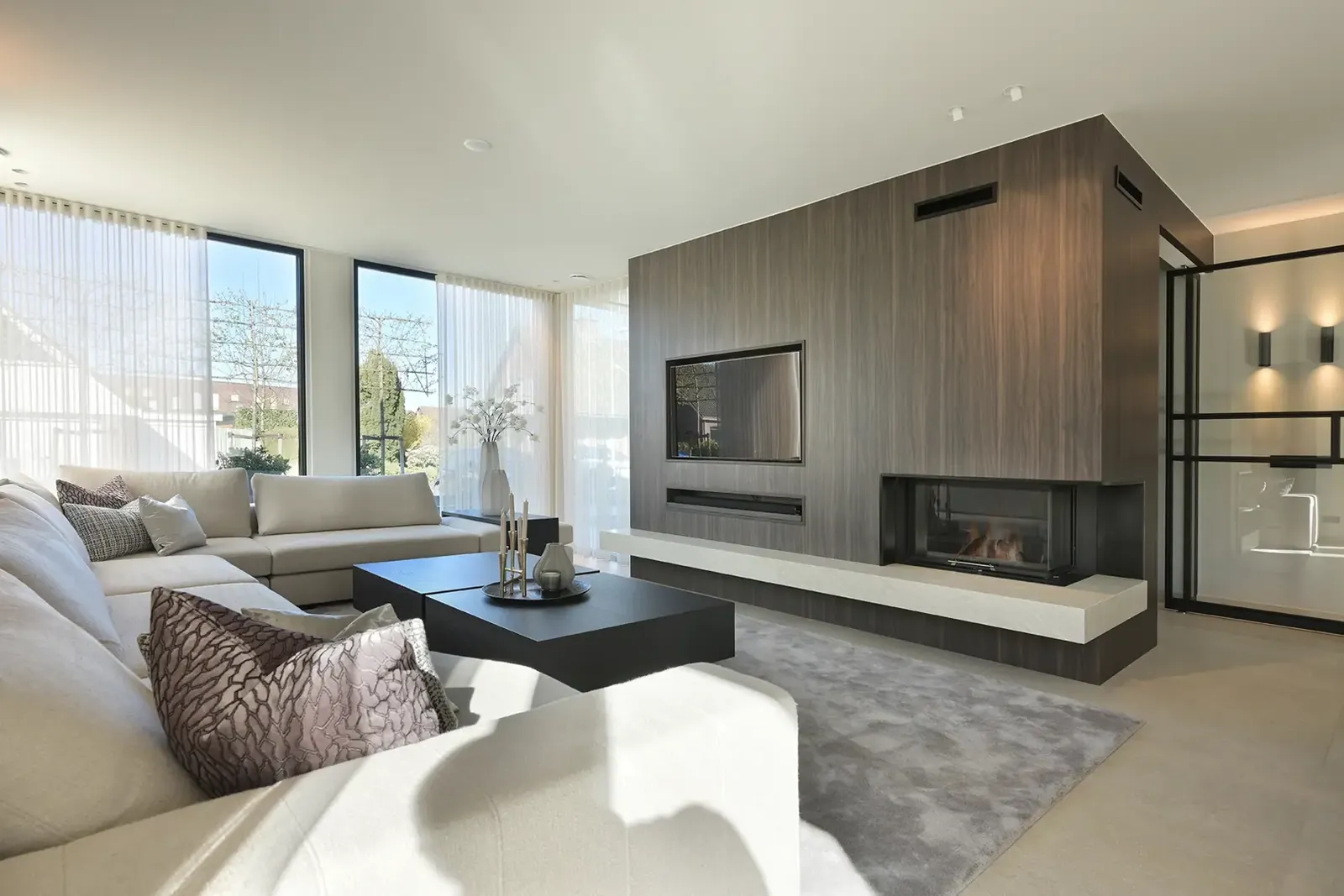
Freestanding cupboards fill a room; bespoke joinery ties it together. A fireplace wall in which the television disappears, or a hall with built-in storage, takes clutter out of sight and keeps the architecture calm. Because we draw joinery for that one place, it also makes use of the awkward places, such as an alcove or the space under the stairs.
That takes drawings that are right to the millimetre and a workshop that builds exactly what is drawn. For our bespoke joinery we work with a regular partner, Quadro Interieurbouw in Nijverdal. They develop and produce everything in their own workshop and install it on site. Because we have worked together for years, they know which details matter to us. How such a project runs is described in our article on furniture made to measure.
Inspiration
5. Choose generously in a large room
In a large room it is easy to choose too cautiously. Furniture that is too small makes such a room feel smaller: it leaves empty zones with no function and no atmosphere. A generous sofa or a long dining table gives a large room the weight it needs.
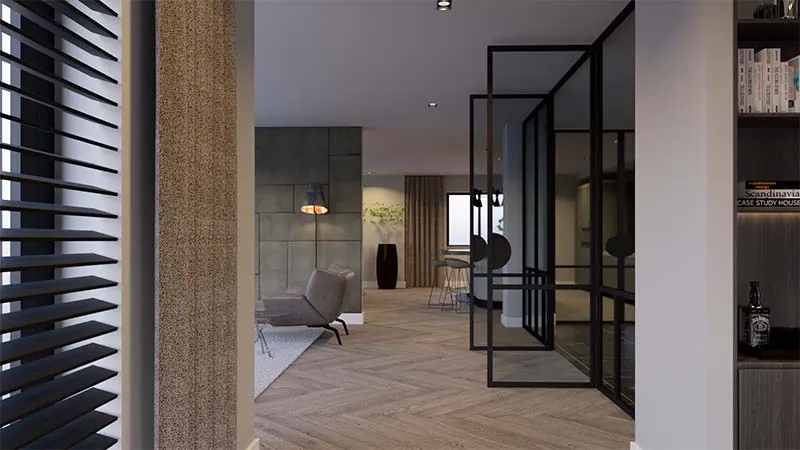
Our rule of thumb: furniture may fill the room, as long as the routes through it stay clear and logical. That is why we draw the layout of each room first, and only then the furniture plan. How wide a doorway is and where a wall stops are things you notice every day, even when you no longer consciously look at them.
Inspiration
6. Light in layers
Artificial light decides how your house looks in the evening, and that is exactly when you are at home. A good lighting plan works in layers: general light for function, ambient light for the evening and accent light for a wall, a cabinet or a work of art. With those layers a room has a character of its own after dark.
Plan the layers early. Recessed spots, wall lights and floor lamps need preparation during the build, before floors and walls are closed. We record everything in a lighting schedule: a dimensioned lighting plan with the technical details of every fitting, so the electrician knows exactly what to do. There is more on this in our article on why lighting matters in interior design.
Inspiration
7. Give texture room
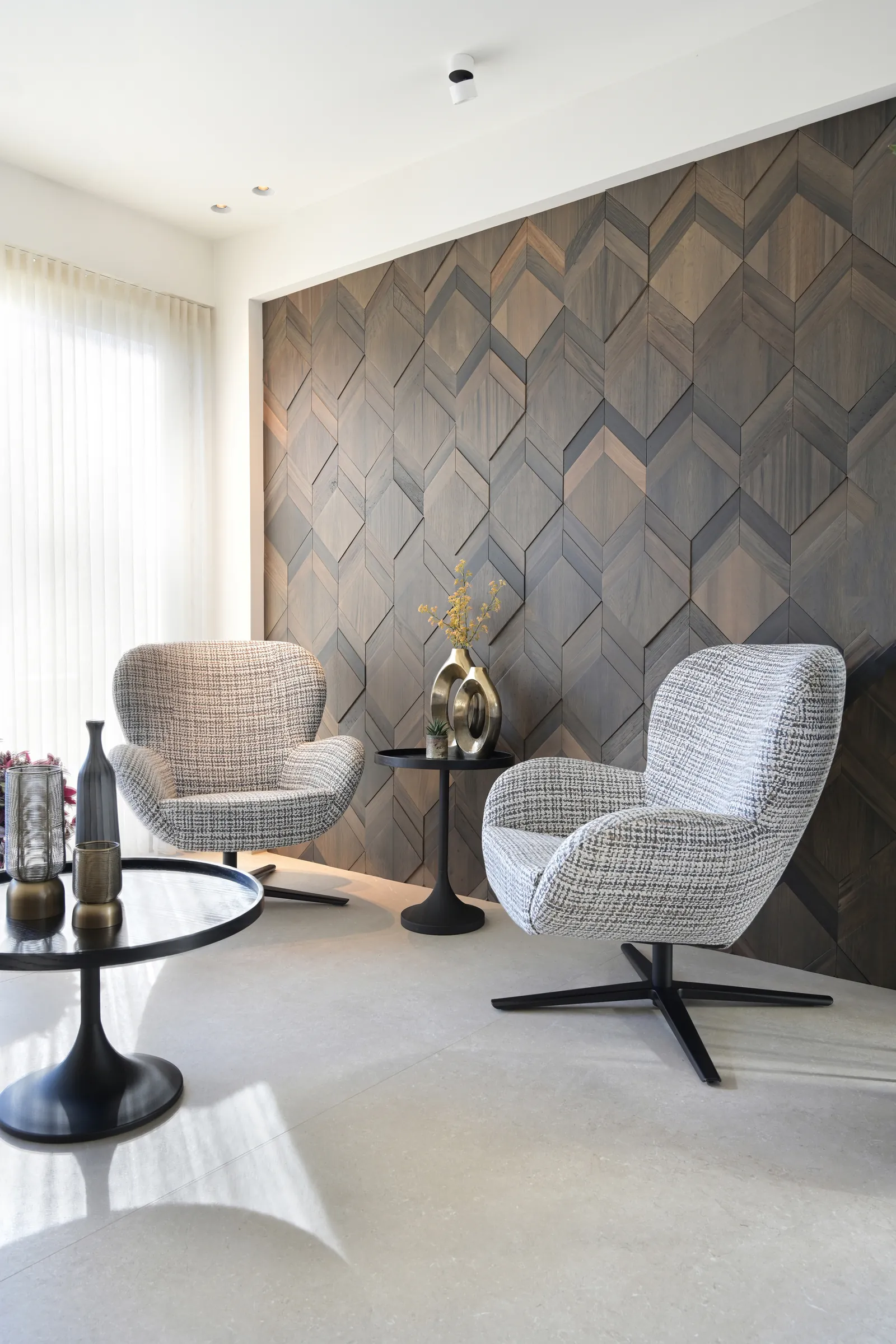
Colour draws attention; texture draws you in. A wall with texture has depth and responds to the light as it moves across the surface through the day. Think of lime plaster or béton ciré, built up in layers by a specialist decorator, or wall panels of bog oak that lay in peat for hundreds of years.
Textiles change the mood of a room fastest: a wool fabric on an armchair, a linen curtain down to the floor. Choose texture where you come close, such as the wall behind the sofa and the fabric you sit on. That is where you feel the difference.
Inspiration
8. Let one party oversee the whole until the handover
A luxury interior stands or falls with the build. A joint in the natural stone that falls just in the wrong place, or a spotlight that misses the painting: these are small things, and you see them every day. That is why we stay involved during the build. We guard the quality, solve problems and make sure that what is on paper is carried out that way.
In that phase the project passes to a dedicated project manager who directs our partners. You have one point of contact who keeps the schedule and coordinates the trades, so you do not have to. How that journey runs, from the first sketch to the handover of the keys, is set out in our approach.
Inspiration
Finally
Examples from our own projects, from a glass fireplace to a cinewall, are in the article Luxury interiors: ideas for your home. Our LookBook has ten tips like these, and two projects: the full renovation of a house in Annen, from start to finish, and the design for an apartment in Lemmer. You can request it on the LookBook page.

Reinder Veenstra, interior designer and founder
He designs for all the senses and starts every design by looking at how people live. Read Reinder's story
Further reading: What an interior designer does · Ideas from luxury interiors · Furniture made to measure
Start your project
Book an introduction
Curious what we could do for your home? We are glad to meet, with no obligation.
 STUDIO REINDER VEENSTRA